Friday Night Was Sacred: The Vanishing Ritual of Appointment America
Photo: Russell Lee, Public domain, via Wikimedia Commons
There was a time, not very long ago, when missing an episode of your favorite television show meant missing it forever. Not for a few hours until you could catch the replay. Not until it hit a streaming platform. Forever. You either watched Dallas on Friday night at 9 PM Central, or you didn't watch it at all — and on Monday morning, you'd be standing at the office water cooler with nothing to say.
That world is gone so completely that it's difficult to explain to anyone under thirty why it mattered so much. But it did matter, in ways that shaped American culture more deeply than we tend to recognize.
One Screen Per Town
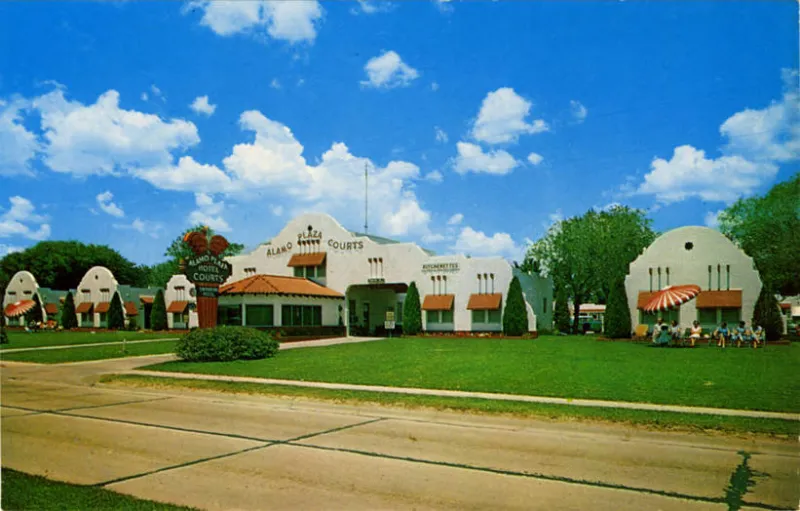
Before television entered American living rooms in the late 1940s and early 1950s, movies were the dominant mass entertainment, and seeing them required leaving home entirely. Most American towns had a single movie theater — sometimes two if you were lucky. Whatever was playing was what you watched. There were no alternatives, no competing screens, no way to see a different film unless you waited for it to cycle through the distribution system and arrive at your local house, sometimes months after its big-city premiere.
The theater itself was a genuine community institution. In smaller towns especially, the Friday or Saturday night movie was a social event as much as an entertainment one. You'd see your neighbors, your classmates, your coworkers. The shared experience of watching the same film in the same room at the same time was the only kind of movie-watching that existed. The idea of watching a film alone, in your own home, at a time of your choosing, would have sounded like science fiction.
Studios controlled everything downstream from that setup. They decided which films got made, which stories got told, which stars became famous, and how long any given movie stayed in circulation. Regional tastes were largely irrelevant. If the major studios in Hollywood decided that a certain type of story was worth telling, that story reached virtually every screen in America. If they decided it wasn't, it simply didn't exist as far as most audiences were concerned.
The Networks Had the Same Power
When television arrived and spread with remarkable speed through American homes during the 1950s, the same centralized logic applied. Three networks — NBC, ABC, and CBS — determined what approximately two hundred million Americans watched in the evening. The phrase "appointment television" wasn't coined as a nostalgic concept. It was just a description of reality. You watched what was on, when it was on, because there was no other option.
This created something genuinely powerful: a shared national viewing experience on a scale that's almost impossible to replicate today. When the final episode of M*A*S*H aired in February 1983, roughly 106 million Americans watched it simultaneously. Not over the course of a week as people caught up on their own schedules. On the same night, at the same time, together. It remains the most-watched single broadcast in American television history.
The morning after a major television event had a specific texture. Workplaces, schools, and diners buzzed with the same conversation. Everyone had seen the same thing. Everyone had opinions. The shared reference point was total and immediate in a way that required no curation, no algorithm, and no recommendation engine. The network had made the decision for you, and because it had made the same decision for everyone, the cultural moment was unified.
The VCR Cracked the Door
The first significant challenge to appointment culture came from an unlikely piece of hardware. The VCR, which spread through American homes during the 1980s, introduced a concept that seems obvious now but was genuinely radical at the time: time-shifting. You could record a show and watch it later. You could, in theory, build your own schedule rather than conform to the network's.
The reality was messier. Programming a VCR was notoriously difficult — the blinking 12:00 on millions of unconfigured machines became a cultural shorthand for technological frustration. And even when it worked, the experience felt slightly transgressive, like you were bending a rule. Renting movies from Blockbuster gave audiences more choice, but still required a physical trip, a return trip, and the possibility that the movie you wanted was already checked out.
Cable television expanded the number of channels significantly through the 1980s and 1990s, but the basic model remained appointment-based. More options, same fundamental structure: the schedule was set by someone else, and you organized your evening around it.
The Dam Breaks
Netflix launched its streaming service in 2007. Within five years, the entertainment landscape had changed more dramatically than in the previous five decades. By 2013, the company released the entire first season of House of Cards at once — deliberately — and introduced a phrase that would come to define a generation of viewing habits: binge-watching.
 Photo: House of Cards, via focus.independent.ie
The implications went far beyond convenience. When audiences consumed entire seasons of television in a weekend, the water-cooler conversation changed fundamentally. You couldn't assume a shared reference point anymore. Your coworker might be on episode two while you were on episode ten. The unified national moment — everyone watching the same thing on the same night — became not just uncommon but structurally impossible for most streaming content.
Today, Americans have access to more film and television content than any previous generation could have imagined. The choice is genuinely staggering. But the shared experience that came with having no choice at all — that specific, slightly coercive cultural unity — has largely dissolved.
What Shared Culture Looks Like Now
It hasn't disappeared entirely. Live sports remain the last reliable mass-viewing event, which partly explains why broadcast rights have become so extraordinarily valuable. Award shows, major news events, and occasional cultural phenomena still generate simultaneous national attention. The premiere of a highly anticipated series can still produce something close to the old appointment energy, at least for a night.
But the default is now individual. You watch what you want, when you want, on whichever screen is nearest. The algorithm knows your preferences better than any network programmer ever could, and it serves them back to you in a continuous, personalized stream.
The town that once shared one screen now has three hundred million screens, each showing something slightly different. Whether that's liberation or fragmentation — or both — probably depends on what you remember losing.
 Photo: MASH, via pics.filmaffinity.com