When Your Local Banker Decided If You Could Buy a Washing Machine: The Death of America's Handshake Economy
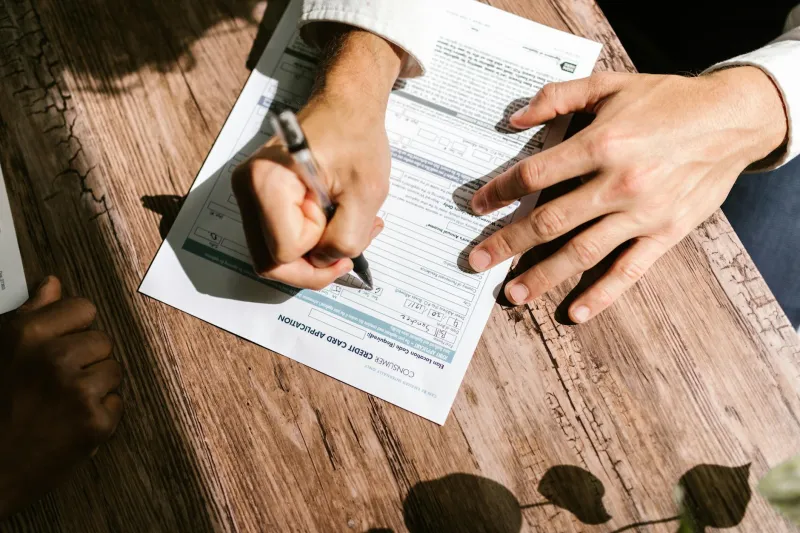
The Man Behind the Mahogany Desk
In 1955, if Margaret Thompson wanted to buy a new Frigidaire refrigerator for her growing family in Toledo, Ohio, she couldn't just swipe a card or click "buy now, pay later." She had to put on her Sunday best, walk into First National Bank, and sit across from Mr. Henderson, the loan officer who had known her father and decided whether the Thompson family was "good for it."
This wasn't just about refrigerators. Cars, furniture, home improvements, even Christmas gifts—everything beyond what you could pay for in cash required the blessing of a human being who held your financial future in their hands. And those hands weren't always fair.
When Your Reputation Was Your Credit Score
The lending system of mid-20th century America operated on what bankers called "the five C's": character, capacity, capital, collateral, and conditions. But character came first, and character was subjective. Did you attend the right church? Did your wife keep a tidy house? Were you the "right kind" of person for this neighborhood?
Local bank managers kept mental files on everyone in town. They knew who paid their bills on time, whose husband had a drinking problem, and which families had "questionable" associations. This intimate knowledge could work for you—if you were part of the in-crowd. The bank president's golf buddy might get a handshake loan for a new Buick. But if you were Black, recently divorced, or simply new to town, that same handshake could be withheld entirely.
Women faced particular obstacles. Until the Equal Credit Opportunity Act of 1974, banks could legally require a woman to bring her husband to co-sign any loan, regardless of her own income. Single women were often denied credit altogether, considered too risky by virtue of their unmarried status.
The Plastic Revolution Changes Everything
The transformation began quietly in 1958 when Bank of America mailed 60,000 unsolicited credit cards to residents of Fresno, California. It was an experiment that would reshape American commerce. Unlike traditional installment loans that required a face-to-face meeting and were tied to specific purchases, these cards offered something revolutionary: anonymous, instant purchasing power.
By the 1970s, credit cards were spreading across America like wildfire. Suddenly, you didn't need Mr. Henderson's approval to buy that refrigerator. You didn't need to explain your purchase or justify your worthiness. You just needed a piece of plastic and a signature.
The real game-changer came in the 1980s with the development of credit scoring systems. Fair Isaac Corporation's FICO score turned the art of lending into a science. Your creditworthiness was no longer about whether the banker liked you—it was a three-digit number calculated by algorithms that didn't care about your race, religion, or social connections.
The Algorithm Knows You Better Than Your Neighbor
Today's lending landscape would seem like science fiction to Margaret Thompson. Within seconds of applying for credit online, algorithms analyze hundreds of data points: payment history, debt-to-income ratios, length of credit history, even sometimes your shopping patterns and social media activity. The decision comes back instantly, often before you've finished your coffee.
Buy-now-pay-later services like Klarna and Afterpay have pushed this even further. You can split a $200 purchase into four payments with nothing more than a soft credit check that takes milliseconds. The friction that once made every credit decision a meaningful event has virtually disappeared.
This democratization of credit has been transformative. Americans who would have been shut out of the old system—young adults without established relationships, minorities who faced discrimination, women building independent financial lives—now have access to credit based on objective criteria rather than subjective judgment.
What We Gained and What We Lost
The numbers tell the story of this transformation. In 1960, only about 16% of American families had any kind of revolving credit. Today, the average American household has access to over $30,000 in available credit across multiple cards and lines of credit.
This accessibility has enabled economic mobility and consumer freedom that previous generations couldn't imagine. Young entrepreneurs can launch businesses on credit card funding. Families can handle emergencies without begging a banker for help. The gatekeepers who once controlled access to the American Dream have largely been removed.
But something was lost in translation from handshakes to FICO scores. The old system, for all its flaws and prejudices, imposed natural limits on debt accumulation. When you had to look Mr. Henderson in the eye and explain why you needed to borrow money, frivolous purchases were harder to justify. The social pressure and personal relationships that governed lending created informal guardrails against over-borrowing.
Today's frictionless credit system has contributed to record levels of consumer debt. The average American household carries over $6,000 in credit card debt, and student loan debt has exploded to over $1.7 trillion nationally. The algorithms that democratized access to credit don't care if you're borrowing more than you can reasonably repay—they just care about the mathematical probability that you will.
From Personal to Algorithmic
The shift from relationship-based to algorithm-based lending represents one of the most significant changes in how Americans interact with money. We've traded the arbitrary power of individual gatekeepers for the cold efficiency of mathematical formulas. We've gained fairness and lost personal connection. We've achieved access and accepted debt.
Margaret Thompson's granddaughter can buy that refrigerator with a tap of her phone, no questions asked. Whether that's progress or a cautionary tale depends on whether she can afford the monthly payments—something the algorithm will calculate, but won't necessarily care about.