When Your Doctor Sent You Home to Die: The Cancer Revolution That Changed Everything
The Phone Call That Ended Everything
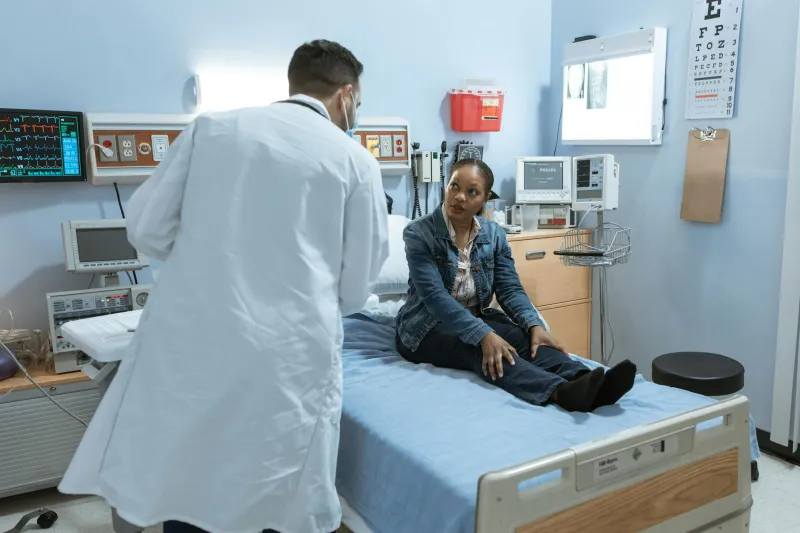
In 1965, when Dr. Richardson called Margaret Thompson into his office to discuss her test results, the conversation lasted exactly three minutes. "Mrs. Thompson, you have cancer," he said, closing her file. "I'm sorry. You should get your affairs in order." There was no discussion of treatment options, no second opinions suggested, no support groups mentioned. Cancer was cancer, and cancer meant death—usually within months.
 Photo: Margaret Thompson, via images.squarespace-cdn.com
Margaret's experience wasn't unusual. It was standard practice. Across America, a cancer diagnosis functioned as a medical death certificate, signed and delivered by doctors who had precious few tools in their arsenal and even less hope to offer.
When Medicine Had No Answers
The cancer treatment landscape of the 1950s and 1960s would be unrecognizable to today's patients. Surgery was often the only option, and it was brutal—radical mastectomies that removed not just breasts but entire chest muscles, leaving women permanently disfigured. Chemotherapy existed but was so toxic that many patients died from the treatment rather than the disease.
Radiation therapy meant lying under massive, imprecise machines that burned healthy tissue along with tumors. There were no CT scans to guide treatment, no genetic testing to identify the best approach, no targeted therapies designed for specific cancer types. Doctors essentially threw everything they had at the disease and hoped something would stick.
The five-year survival rate for all cancers combined hovered around 39% in the 1960s. For many specific types—pancreatic, lung, brain—the numbers were far worse. A diagnosis of metastatic cancer was considered a medical emergency only in the sense that patients needed to prepare for death quickly.
The Information Desert
Perhaps most shocking to modern patients would be the complete lack of information available to cancer patients. There was no internet to research treatment options, no patient advocacy groups, no detailed explanations of what was happening inside their bodies. Doctors operated under the paternalistic belief that patients couldn't handle the truth about their condition.
Many families actively collaborated with doctors to keep diagnoses secret from patients themselves. It wasn't uncommon for a husband to know his wife had cancer while she was told she had "a small growth that needed monitoring." The medical establishment believed that hope was more important than honesty.
Patients had no ability to seek second opinions easily, no access to clinical trials, and no understanding of their treatment options. They simply trusted their local doctor's judgment and prepared for the worst.
The Revolution in Real Time
Today's cancer patient experience would seem like science fiction to someone from 1965. Before even walking into an oncologist's office, patients can access detailed information about their specific cancer type, treatment success rates, and potential side effects. They can connect with other patients online, research clinical trials, and arrive at appointments armed with questions and printouts.
The treatment options available today represent a complete transformation of cancer medicine. Immunotherapy helps the body's own immune system fight cancer. Targeted therapies attack specific genetic mutations that fuel tumor growth. Precision medicine means treatments are tailored to the individual characteristics of both the patient and their specific cancer.
Surgery has become minimally invasive. Chemotherapy is far more sophisticated, with drugs designed to target cancer cells while sparing healthy tissue. Radiation therapy can now pinpoint tumors with millimeter precision.
The Numbers Tell the Story
The statistical transformation is staggering. The overall five-year survival rate for all cancers has jumped to 68%—nearly double what it was in the 1960s. For many cancers, the improvements are even more dramatic. Childhood leukemia, once almost universally fatal, now has a cure rate exceeding 90%. Breast cancer survival rates have improved from roughly 63% to 91%.
Even cancers that remain challenging show remarkable progress. The median survival for metastatic melanoma was measured in months in the 1970s. Today, some patients with advanced melanoma live for years, and a growing number appear to be cured entirely.
From Death Sentence to Treatment Plan
The most profound change isn't just medical—it's psychological. A cancer diagnosis today, while still frightening, has transformed from an automatic death sentence into the beginning of a complex negotiation. Patients discuss treatment timelines, weigh quality of life considerations, and plan for survivorship.
Cancer treatment centers now employ teams of specialists: medical oncologists, radiation oncologists, surgeons, social workers, nutritionists, and mental health counselors. The focus has shifted from simply trying to keep patients alive to helping them live well during and after treatment.
Patient advocacy has become a powerful force, with organizations providing everything from transportation to treatment to lobbying for research funding. The secrecy and paternalism of mid-century medicine has given way to shared decision-making and informed consent.
The Distance We've Traveled
When Margaret Thompson received her diagnosis in 1965, she had six months to live. Today, a woman with her exact same cancer type and stage would have an 85% chance of being alive five years later, with many living normal lifespans.
That transformation—from hopeless to hopeful, from secretive to transparent, from one-size-fits-all to personalized—represents one of the most remarkable achievements in medical history. It happened not over centuries, but within the lifetime of people still walking among us, forever changing what it means to hear those three words: "You have cancer."