When Getting Your Tonsils Out Meant Missing a Month of School: America's Medical Bed Rest Revolution
The Month That Changed Everything
In 1965, eight-year-old Tommy Peterson had his tonsils removed at Minneapolis General Hospital. His parents packed a suitcase with enough clothes for three weeks. Tommy's mother rearranged her entire work schedule, knowing she'd need to visit daily during strict hospital visiting hours—2 to 4 PM and 7 to 8 PM only. His father worried about the mounting hospital bills, even with insurance covering just 80% after a hefty deductible.
Today, Tommy's grandson would have the same procedure done at an outpatient surgery center, be home for lunch, and back at school within a week.
This isn't just medical progress—it's a complete philosophical revolution in how America thinks about healing, recovery, and what the human body actually needs to get better.
When Hospitals Were Hotels You Couldn't Leave
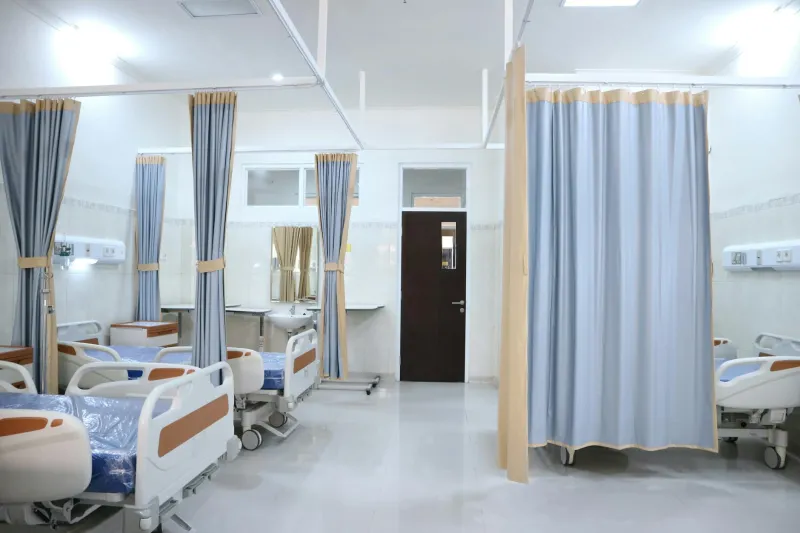
The mid-20th century hospital experience would shock modern patients. A routine appendectomy meant two weeks minimum in the hospital. Childbirth? Ten days to two weeks was standard, with mothers forbidden from lifting anything heavier than their baby. Heart attack patients spent six weeks flat on their backs, literally prohibited from sitting up.
Doctors believed the body healed through complete rest. Movement was dangerous. Activity was the enemy of recovery. Patients were expected to lie still, eat bland food, and let their bodies slowly repair themselves in sterile hospital rooms.
"We thought we were being scientific," recalls Dr. Margaret Chen, who practiced internal medicine in the 1970s. "Total bed rest seemed logical. If you broke your leg, you didn't walk on it. We applied that thinking to everything."
Hospitals functioned more like extended-stay medical hotels. Patients brought personal belongings, settled in for weeks, and families adjusted their entire lives around long-term hospital stays. Insurance policies were structured around these extended admissions, and hospital wings were designed for patients who weren't going anywhere quickly.
The Research That Changed Everything
The transformation began in the 1970s when researchers started questioning bed rest orthodoxy. Study after study revealed a shocking truth: prolonged inactivity was often more harmful than helpful.
Patients on extended bed rest developed blood clots, muscle weakness, depression, and pneumonia. Their bones weakened, their cardiovascular systems deteriorated, and their recovery actually slowed down. The very treatment designed to promote healing was sabotaging it.
Dr. Richard Bohannon's landmark 1984 study on post-surgical mobility sent shockwaves through American medicine. Patients encouraged to walk within hours of surgery recovered faster, had fewer complications, and reported better outcomes than those kept bedridden.
"We had it backwards," Bohannon later reflected. "The body heals through movement, not stillness."
The Insurance Revolution Nobody Talks About
The shift wasn't just medical—it was economic. In 1960, the average hospital stay cost families about $300 (roughly $3,000 today). But hospital stays were lasting weeks, not days. Insurance companies, initially resistant to covering these extended stays, eventually realized something remarkable: shorter stays with better outcomes cost everyone less money.
DRGs (Diagnosis-Related Groups), introduced by Medicare in 1983, revolutionized hospital payment. Instead of paying for each day of care, hospitals received fixed payments per diagnosis. Suddenly, keeping patients longer meant losing money, not making it.
This created powerful incentives to get patients home faster—but only if they could do so safely. The medical establishment had to prove that shorter stays produced better results, not just cheaper bills.
How Families Completely Reorganized
The old system shaped entire family structures. When Dad had his gallbladder removed, Mom took unpaid leave for a month. Extended families coordinated care for weeks. Children grew up expecting that serious medical events meant prolonged absence from normal life.
Modern families can barely comprehend this reality. Today's parents struggle to take a single day off when their child has outpatient surgery. The idea of reorganizing life around a three-week hospital stay for a routine procedure seems almost medieval.
"My mother had five children, and each birth meant two weeks in the hospital," remembers 78-year-old Patricia Williams from Phoenix. "That's ten weeks of my father managing everything alone, plus visiting hours, plus the cost. We planned our whole lives around these medical events."
The Technology That Made It Possible
Shorter stays became possible through surgical innovations Americans now take for granted. Laparoscopic surgery replaced large incisions with tiny cuts. Better anesthesia meant faster recovery times. Improved pain management let patients move sooner. Advanced monitoring allowed doctors to track recovery remotely.
But the biggest change was philosophical: recognizing that healing happens best at home, surrounded by family, engaging in normal activities as soon as safely possible.
What We Lost and Gained
The old system had unexpected benefits. Extended hospital stays meant intensive medical monitoring. Patients had time to fully recover before returning to responsibilities. Families could gradually adjust to post-surgical care needs.
But the gains far outweigh the losses. Patients recover in comfortable, familiar environments. Families maintain normal routines. Healthcare costs dropped dramatically. Hospital-acquired infections plummeted. Patient satisfaction soared.
The Recovery Revolution Continues
Today's medical philosophy—get patients moving, get them home, get them back to normal life—would have seemed reckless to 1960s doctors. Yet outcomes prove this approach works better for almost everything.
Same-day surgery is now routine for procedures that once required weeks of hospitalization. Joint replacements that meant months of recovery now send patients home within days. Even major cardiac procedures increasingly emphasize rapid mobilization.
The transformation reveals something profound about medical progress: sometimes the biggest breakthroughs come not from new technology, but from questioning fundamental assumptions about what healing actually requires. In America's case, we discovered that the best medicine was often getting out of the hospital as quickly as possible.