When Tomorrow's Weather Was Anyone's Guess: The Astonishing Rise of Accurate Forecasting
The Day Weather Killed a President
On March 4, 1841, William Henry Harrison delivered the longest inaugural address in American history during a cold, wet day in Washington, D.C. No meteorologist warned him about the brutal conditions. No weather app suggested he wear a coat. Harrison caught pneumonia and died 31 days later, becoming the shortest-serving president in U.S. history.
This wasn't unusual. In Harrison's era, weather simply happened to people. There were no warnings, no preparations, just whatever nature decided to throw at you that day.
When Farmers Gambled Everything on the Sky
Imagine planting your entire corn crop based on nothing more than how your joints felt that morning. For most of American history, farmers made life-or-death decisions about their livelihoods using folk wisdom, almanacs printed months in advance, and pure hope.
The Old Farmer's Almanac, first published in 1792, claimed 80% accuracy but was essentially sophisticated guesswork based on astronomical patterns and historical averages. Farmers would scan the horizon for cloud formations, watch how their animals behaved, and pray they'd guessed right about when to plant or harvest.
A single unexpected frost could destroy an entire season's work. Drought could bankrupt families who had no advance warning to conserve water or adjust their crops. The 1930s Dust Bowl wasn't just caused by poor farming practices—it was made catastrophically worse by farmers who had no way to predict the unprecedented drought conditions heading their way.
Ships Sailing Blind Into Storms
Marine disasters tell the starkest story of weather prediction's limitations. The Great Hurricane of 1938 slammed into New England with virtually no warning, killing over 600 people. Weather bureaus knew a hurricane existed somewhere in the Atlantic, but they had no way to track its path or predict when it would make landfall.
Ship captains routinely sailed into storms that meteorologists couldn't see coming. The Andrea Doria sank in 1956 partly due to unexpected fog that no forecast had predicted. Fishing fleets would disappear without a trace because they had no warning of the deadly storms approaching their location.
Compare that to Hurricane Sandy in 2012. Meteorologists tracked its formation off the African coast, predicted its unusual westward turn toward New York City, and gave residents nearly a week's warning to evacuate. The same storm that would have been a complete surprise in 1938 became a manageable emergency in 2012 purely because we could see it coming.
The Revolution Hidden in Your Pocket
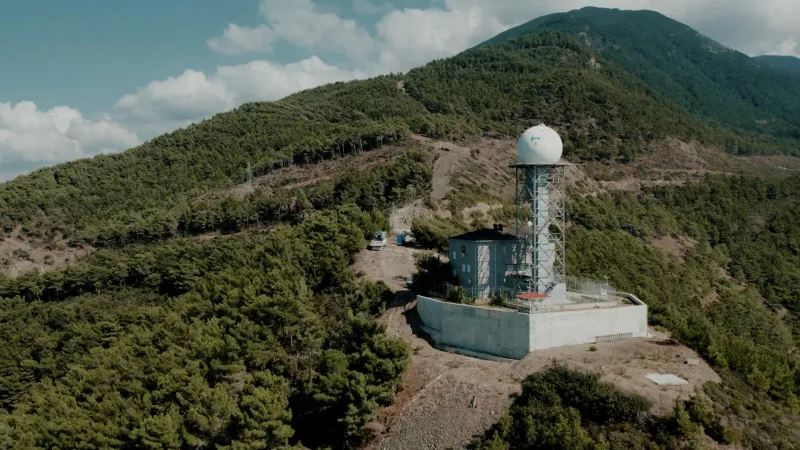
Your smartphone contains more weather-sensing capability than the entire U.S. Weather Bureau had in 1950. Today's meteorologists use satellites that can peer inside storm clouds, Doppler radar that measures wind speeds from hundreds of miles away, and computer models that process billions of data points every hour.
The National Weather Service now issues tornado warnings an average of 13 minutes before a tornado touches down. In the 1950s, the word "tornado" was actually banned from official weather forecasts because meteorologists thought it would cause panic—they simply couldn't predict them reliably enough to risk false alarms.
Modern weather models can accurately predict conditions five days in advance with the same reliability that 1970s forecasts had for the next day. Your local weather app knows when rain will start and stop within a 15-minute window for your exact neighborhood.
The Science That Saves Lives Every Day
Hurricane Katrina, devastating as it was, would have killed tens of thousands more people if it had struck in 1955 instead of 2005. The difference? Five days of advance warning that allowed most of New Orleans to evacuate. Modern hurricane prediction has reduced storm-related deaths by over 90% since the 1950s, even as coastal populations have exploded.
Tornado deaths have plummeted despite more people living in tornado-prone areas. The reason isn't stronger buildings—it's better warnings. Doppler radar can now detect tornado formation before the funnel cloud even becomes visible, giving communities precious minutes to seek shelter.
Even routine daily decisions rely on weather accuracy we take for granted. You check your phone before choosing clothes, planning outdoor activities, or deciding whether to bike to work. This casual relationship with tomorrow's weather represents a fundamental shift in how humans relate to nature.
The Miracle We Don't Notice
Perhaps the most remarkable thing about modern weather forecasting is how invisible its success has become. When your weather app correctly predicts that rain will start at 3:17 PM and stop at 4:23 PM, you don't marvel at the technological achievement—you just grab an umbrella.
But your great-grandparents would have considered such precision literally magical. They lived in a world where weather was fundamentally unknowable beyond a few hours, where entire harvests could be lost to surprise storms, and where stepping outside meant accepting whatever nature had in store.
Today, we complain when the forecast is off by a few degrees or when predicted rain arrives an hour late. We've become so accustomed to weather accuracy that we've forgotten how recently humans gained the ability to see the atmospheric future.
The next time you glance at your phone's weather widget, remember: you're holding a crystal ball that actually works, powered by one of humanity's most underappreciated scientific revolutions. Knowing tomorrow's weather isn't just convenient—it's a modern miracle disguised as everyday technology.