The Mystery Illness That Stumped Five Doctors: When Getting Answers About Your Health Was a Years-Long Quest
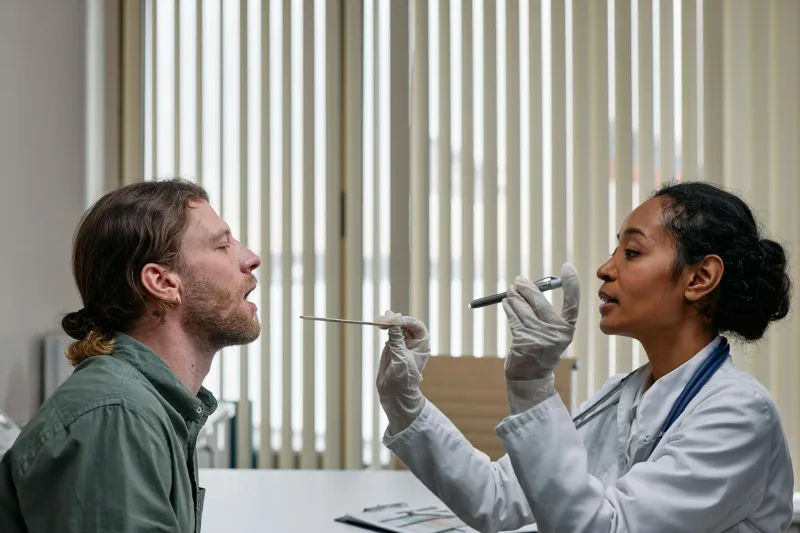
In 1962, Margaret Thompson from Cedar Rapids, Iowa, began experiencing strange dizzy spells and fatigue. Her family doctor suggested "women's troubles" and prescribed rest. Six months later, still unwell, she traveled 200 miles to see a specialist in Chicago who suspected her thyroid. Another specialist disagreed, pointing to possible heart issues. It took eighteen months, four doctors, and nearly $800—equivalent to about $7,500 today—before anyone discovered the small tumor pressing against her inner ear that was causing her symptoms.
Margaret's story wasn't unusual. It was typical.
When Medical Mysteries Could Last Decades
For most of the 20th century, getting an accurate medical diagnosis was often a marathon of educated guesswork, expensive consultations, and frustrating dead ends. Without today's diagnostic tools, doctors relied heavily on physical examination, patient history, and clinical intuition. What we now consider routine—blood work that reveals dozens of conditions, imaging that shows inside the body, or genetic tests that pinpoint hereditary diseases—simply didn't exist for the average American.
Consider diabetes, now diagnosed with a simple blood test costing about $25. Before reliable glucose testing became widespread in the 1960s, doctors often diagnosed diabetes by literally tasting a patient's urine for sweetness. Many Americans lived for years with unexplained thirst, fatigue, and frequent urination before receiving an accurate diagnosis. Some never got one at all.
The situation was even more challenging for complex conditions. Autoimmune diseases like lupus or rheumatoid arthritis, which affect multiple body systems, could mystify doctors for years. Patients bounced between specialists—a rheumatologist in Boston, a dermatologist in Philadelphia, an internist back home—with each doctor seeing only pieces of a larger puzzle they had no way to complete.
The Great Medical Pilgrimage
For Americans living outside major metropolitan areas, getting specialized care often meant embarking on what families called "medical pilgrimages." These journeys to renowned hospitals in cities like Baltimore's Johns Hopkins, Boston's Massachusetts General, or Rochester's Mayo Clinic could last weeks and cost thousands of dollars.
Families would pack their belongings and relocate temporarily to cities hundreds of miles away, living in boarding houses or budget hotels while pursuing answers. The Mayo Clinic, founded in 1889, built its entire reputation around this model—bringing together multiple specialists under one roof so patients wouldn't have to travel from city to city seeking opinions.
But even at prestigious medical centers, diagnosis remained largely an art form. X-rays, invented in 1895, could show broken bones and some organ problems, but soft tissue remained invisible. Blood tests were limited and took days or weeks to process. Biopsies required major surgery rather than today's minimally invasive procedures.
Living in Medical Limbo
Perhaps most difficult was the psychological toll of medical uncertainty. Families lived for months or years not knowing whether symptoms indicated something minor or life-threatening. Children missed school, adults couldn't work, and families depleted savings pursuing answers that might never come.
Consider the common scenario of persistent stomach pain. Today, a gastroenterologist might order an endoscopy, CT scan, and comprehensive blood panel, potentially diagnosing conditions like Crohn's disease, ulcers, or gallstones within days. In 1950, the same patient might endure months of dietary restrictions, home remedies, and exploratory procedures before doctors could determine the cause—if they ever could.
Many Americans simply learned to live with undiagnosed conditions. Chronic fatigue, joint pain, digestive issues, and mental health symptoms were often dismissed as "nerves" or "getting older." Women, in particular, faced dismissive attitudes that attributed unexplained symptoms to hysteria or hormones.
The Diagnostic Revolution
The transformation began accelerating in the 1970s and 1980s. CT scanners, first installed in American hospitals in the early 1970s, revolutionized diagnosis by allowing doctors to see inside the body without surgery. MRI machines followed in the 1980s, providing even more detailed images of soft tissue, organs, and the brain.
Blood testing evolved from basic counts to comprehensive panels that could detect hundreds of conditions from a single sample. Genetic testing, once purely theoretical, began identifying hereditary conditions and cancer risks. Ultrasounds made pregnancy monitoring routine and helped diagnose everything from gallstones to heart problems.
Perhaps most importantly, diagnostic tools became geographically accessible. The CT scanner that once existed only at major medical centers could be found at community hospitals and outpatient clinics. Blood work that required specialized laboratories could be processed at local facilities with results available within hours.
From Guesswork to Certainty
Today, many Americans take diagnostic precision for granted. Routine blood work catches diabetes, kidney disease, and thyroid problems before symptoms appear. Mammograms and colonoscopies detect cancers in early, treatable stages. Genetic counseling helps families understand inherited disease risks. Even complex conditions like multiple sclerosis or autoimmune diseases can often be diagnosed within weeks rather than years.
The specialist who once required a 500-mile journey might now be available via telemedicine consultation. Test results that took weeks to obtain arrive via smartphone apps within hours. The medical mystery that could consume years of a family's life and savings might now be solved in a single afternoon at an outpatient clinic.
This diagnostic revolution represents one of medicine's greatest advances—not just the ability to treat disease, but the capacity to identify it quickly and accurately. For Americans living through decades of medical uncertainty, finally getting answers about their health wasn't just relief. It was the difference between living in fear and living with knowledge.