The Factory Gate Physical: When a Cough Could Cost You Your Paycheck
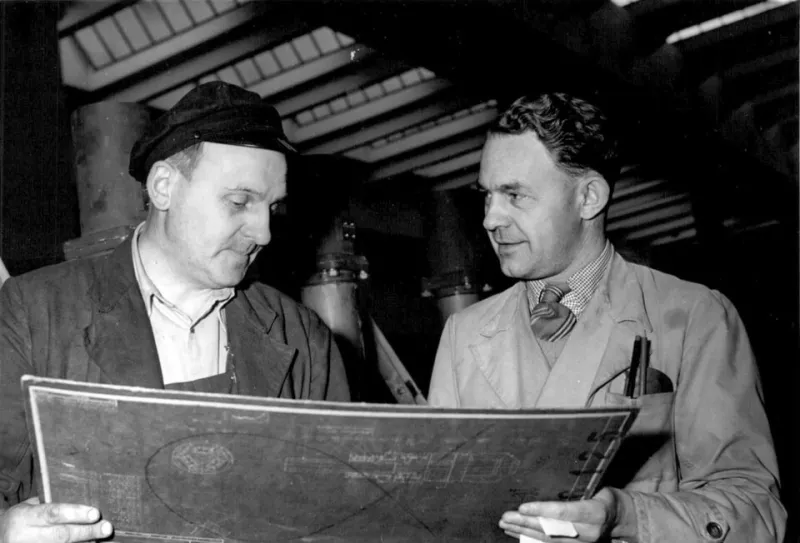
Photo: Unknown photographer, Public domain, via Wikimedia Commons
Picture a Tuesday morning in 1910, Chicago. A machinist named Anton wakes up with a fever of 102. He has two options, and neither involves rest. He can drag himself to the factory gate and hope the gatekeeper doesn't notice his flushed face — or he can stay home, lose a full day's wages, and quietly wonder whether his spot will still exist next week.
There was no third option. There was no HR department to email, no doctor's note to upload, no PTO balance to check. Being sick in turn-of-the-century America wasn't a health event. It was a financial emergency.
The Gatekeeper Had All the Power
Here's a detail most people have never heard of: many large American factories and mills stationed an inspector right at the entrance, whose job was to eyeball arriving workers and turn away anyone who looked too ill to be productive. The logic was brutally practical. A sick man slowed the line, and a contagious one could take down half a shift.
So workers developed a kind of performance art. Men dosed themselves with quinine to hide fevers. Women pinned their hair low to cover rashes. Some arrived early, hoping to slip past before the inspector settled in. Being sent home from the gate wasn't a mercy — it was an unpaid day and a mark against your name.
And if you stayed home? In most industries, wages simply stopped. In the more competitive ones — textile mills, meatpacking plants, early auto factories — repeated absences were a fast track to the door. Why would an employer keep a man who couldn't work when a hundred others were waiting outside?
Working Through It Wasn't Bravery. It Was Math.
We tend to romanticize the old-timer who 'never missed a day in forty years.' But the historical record suggests something less heroic: people worked through fevers, broken bones, infections, and everything else because the alternative was hunger. A 1909 report on American working conditions described laborers with active tuberculosis continuing on the job — partly because they couldn't afford to stop, and partly because the disease took years to finish what it was doing.
Sick funds — small mutual aid pools run by unions, churches, and ethnic associations — were often the only cushion. Members paid dues, and if they fell ill, they might get a few dollars a week. It was a start, but coverage was patchy and the payouts were thin.
The Slow Invention of the Sick Day
Change came in pieces. The Fair Labor Standards Act of 1938 said nothing about illness. Paid sick leave first appeared in scattered union contracts, then spread through the postwar boom as white-collar benefits packages became a recruiting tool. By the 1970s, the idea that a sick person shouldn't be at work had gone from radical to routine.
But the deep cultural shift — the one that actually changed behavior — arrived with germ theory entering public consciousness and, later, with laws like the Family and Medical Leave Act of 1993, which guaranteed at least unpaid job protection for serious illness. Suddenly staying home wasn't just permitted. It was the responsible thing to do.
The Sick Day in the Age of the Laptop
And then the whole concept blurred. Today, a sick day for millions of American workers means... working. Slower, maybe, in sweatpants, from the couch, camera off. The laptop comes to bed with us. The same technology that lets us work from anywhere has made it nearly impossible to fully opt out.
There's a strange irony in the trajectory. Our great-grandparents worked sick because they had no choice and no technology to work otherwise. We work sick because we have no excuse not to. The fever is still there. The gatekeeper is gone — replaced by a calendar full of meetings that don't care how you feel.
The real progress isn't the laptop. It's the idea, barely a century old, that a human being who is ill deserves to recover — with a paycheck, a job, and a future intact. That idea was worth fighting for. It's worth remembering how recently it arrived.

