The Art of Being Completely Lost: How Americans Navigated Before Your Phone Knew Where You Were
The Ritual of the Glove Compartment
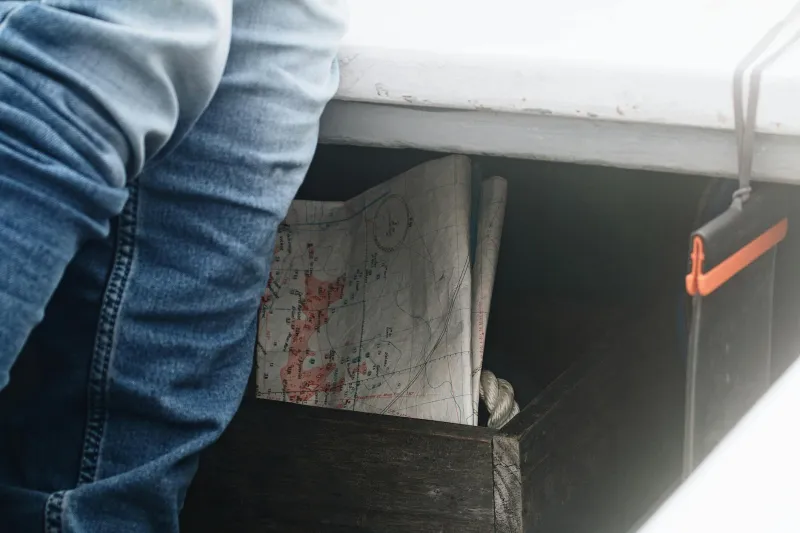
Every American car once carried the same essential survival kit: a folded paper map of the local area, maybe a state atlas, and often a collection of hand-scrawled directions on everything from restaurant napkins to the backs of envelopes. The glove compartment wasn't just storage—it was mission control for any journey beyond your neighborhood.
These weren't the clean, digital overlays we're used to today. Paper maps were physical objects that fought back. They had creases that never quite lined up, sections that tore at the worst possible moments, and a mysterious ability to fold incorrectly no matter how carefully you tried. Reading one while driving was an art form that required the passenger to become a navigator, squinting at tiny road numbers and trying to match them to the blur of highway signs rushing past at 65 mph.
When Gas Stations Were Information Centers
Before the internet put every piece of information at our fingertips, gas stations served as unofficial travel bureaus. The attendant behind the counter wasn't just there to take your money—they were often the local expert on "how to get there from here." These interactions had a social ritual all their own.
"Excuse me, do you know how to get to the mall?" wasn't just a question—it was the beginning of a conversation. The attendant would often grab a pen and start sketching directions on whatever paper was handy, complete with landmarks like "turn left at the big oak tree" or "go past where the old Dairy Queen used to be." These directions came with disclaimers: "Now, there's construction on Route 9, so you might want to..." followed by an entirely new set of instructions.
Gas stations stocked local maps like they were bestselling magazines. The spinning rack near the register held folded maps for every county within a hundred miles, each one a potential lifeline for the traveler who'd ventured beyond familiar territory.
The Geography of Anxiety
Getting lost wasn't just an inconvenience—it was a genuine source of stress that shaped how Americans planned their trips. The fear of missing a turn or ending up in an unfamiliar neighborhood after dark influenced everything from departure times to route choices.
Families would add extra hours to their travel estimates, not for traffic or stops, but for the inevitable wrong turn that would require finding a place to turn around, consulting the map, and getting back on track. The phrase "we're making good time" had real meaning because making bad time—getting lost, backtracking, or stopping to ask for directions—was always a possibility.
This anxiety created its own culture of over-preparation. People studied their routes like students cramming for an exam, memorizing exit numbers and landmark sequences. The smart traveler always had a backup plan, alternative routes sketched out in case the main road was closed or too confusing to follow.
The Social Contract of Being Lost
When GPS didn't exist, being lost was a shared human experience that created unexpected social connections. Pulling into a parking lot to ask a stranger for directions was completely normal—and most people were genuinely helpful. There was an unspoken understanding that everyone had been in that situation.
These interactions had their own etiquette. You approached people who looked local and friendly, usually starting with "Excuse me, I'm not from around here..." The person giving directions would often go to great lengths to be helpful, sometimes even offering to draw a map or, in extreme cases, suggesting you follow them part of the way.
Convenience stores, diners, and even random pedestrians became part of an informal network of navigation assistance. The experience of being lost connected travelers to the places they were visiting in a way that following GPS directions never could.
What We Gained by Never Getting Lost
Today's navigation technology has eliminated the anxiety, the wasted time, and the frustration of being genuinely lost. Your phone knows where you are within a few feet, calculates optimal routes in real-time, and warns you about traffic delays before you encounter them. The efficiency is remarkable.
We can now travel to completely unfamiliar cities with confidence, knowing that our devices will guide us turn by turn to any address. The stress of navigation has been replaced by the calm certainty of following directions that are almost always correct.
The Quiet Loss of Discovery
But something was lost when getting lost became nearly impossible. Those wrong turns that once caused frustration sometimes led to unexpected discoveries—a great restaurant, a scenic overlook, or a charming small town you would never have found otherwise.
The social interactions that came with asking for directions created brief but meaningful connections with strangers. The shared experience of being lost was a reminder that we were all figuring things out together, one turn at a time.
Most significantly, we lost the satisfaction that came with successfully navigating to an unfamiliar destination using nothing but paper maps and local knowledge. There was a real sense of accomplishment in planning a route, following it successfully, and arriving where you intended to go.
The End of an Era
The last generation to remember pre-GPS travel often speaks of it with a mixture of relief and nostalgia. They don't miss the stress or the wasted time, but they remember the adventure that came with not knowing exactly where you were or how you'd get where you were going.
Today, getting lost requires effort. You have to ignore your phone's directions, venture into areas with no cell service, or deliberately choose to navigate the old way. For most Americans, being truly lost—the kind of lost where you have no idea which direction leads home—is now an almost foreign experience.
The folded maps have disappeared from glove compartments, replaced by phone chargers and GPS mounts. Gas station attendants no longer need to be local geography experts. And the art of reading a paper map while your passenger squints at road signs has become as obsolete as using a rotary phone.
In gaining the ability to know exactly where we are at all times, we've lost something harder to quantify: the experience of finding our way through an uncertain world, one landmark at a time.